The Hari Art Prize Hong Kong 2026
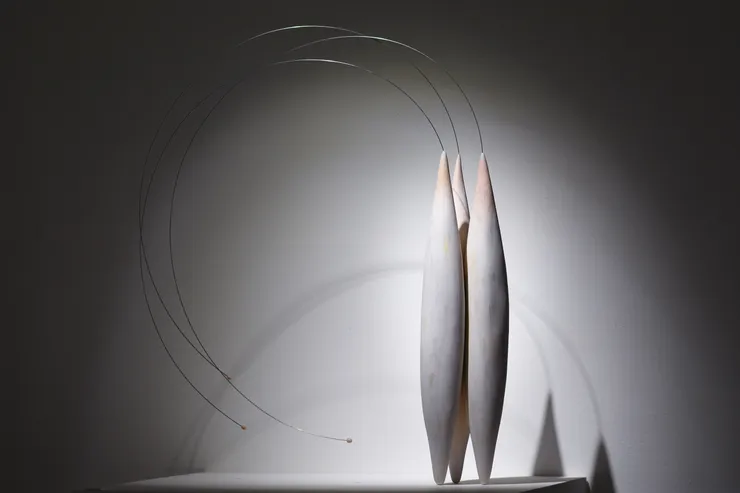
Now in its third year, the Hari Art Prize in Hong Kong seeks to champion the remarkable talent that’s emerging in the arts at a grassroots level. From over 700 submissions, the artworks you see exhibited around the hotel come from this year’s shortlist. There’s a rich diversity of works not just in materials and mediums but also in messages and moods. Some of the pieces seem sturdy and immovable while others feel as delicate as a breeze. There’s a recurring emphasis on the sublime that exists in the everyday, whether in domestic settings or enveloped in the beauty of nature. In this very specific cross-section of Hong Kong’s artists, play is elevated to the level of ritual.
SHORTLISTED artists
Ailsa Wong (b. 1997)’s practice spans across paintings, videos, image-making, games, and installations. Wong explores ways to connect consciousness with primitive emotions to fill the vacuum of belief. Wong’s means of communication draw inspiration from fractured life experiences, wherein meaning is repeatedly dissolved and re-established
Wong’s solo exhibitions include “1” at DE SARTHE (Hong Kong, 2025), “Disembody” at Cattle Depot Artist Village (Hong Kong, 2025), and “00:00” at Yrellag Gallery (Hong Kong, 2024). Wong participated in duo solo exhibition “This Bitter Earth” at Gallery Exit (Hong Kong, 2019), joint exhibition “I Don’t Know How to Love You Teach Me to
Love” at Das Esszimmer (Germany, 2024), and “Ways of Running and Embracing” at Floating Projects (Hong Kong, 2023). Wong currently lives and works in Hong Kong.
Alonso Odira says, "My work explores the abstraction of the natural world through the fragmentation of its forms and structures. Drawing inspiration from geological formations and natural environments, the work focuses on the observation of how nature is constructed, from the shifts of tectonic plates to the quiet growth of moss and foliage.
Across sculpture and painting, fragments become the fundamental language of the work. These give way to shapes, which are layered and reassembled to echo the processes through which nature forms and transforms. All this is underpinned by a deep interest in the history and cultural perspectives from both my home country and my lived experiences in East Asia. As a result, my artwork is driven by the intersection of cultural heritage and the underlying forces that govern the natural world."
Born in 1993 in Voronezh, Russia, Anastasia Fabritskaya is a graduate of the Sculpture Faculty at the Surikov Institute and a member of the Moscow Union of Artists. She has participated in exhibitions across Russia and internationally, including in St. Petersburg, Voronezh, Kaliningrad, Moscow, and Hong Kong Working in bronze, plaster, wood, and ceramics, Fabritskaya explores the beauty of the human form as a reflection of inner experience. Her sculptures express a personal journey — one shaped by self-inquiry, a search for spiritual connection, and a deep bond with the natural world.
Born in Hong Kong in 1989, Anton Poon is a sculptor who delves into themes of cultural transition and personal identity. After relocating to Australia at the age of 13, he cultivated an artistic practice that captures the intricacies of belonging to two cultures.
Anton Poon frequently employs pencil shavings, bridges, tunnels, and Rubik's Cubes as metaphors for passage and the layers of human discovery. He utilizes a variety of materials, including aluminum, bronze, and Corten steel, chosen for their capacity to weather and transform, reflecting the fluidity of identity and the journey it entails.
Poon has garnered significant recognition, including the Société Générale Contemporary Art Collection award in 2022, gallery representation in Art Basel 2024, and a prominent display for " Art of specialties" , RIMOWA in 2025.
Brendan Fitzpatrick: "In this terrifying world, all that matters are the connections we make. I am inspired by the people that I have the privilege of meeting and honour those bonds in paint. By working as much as possible from direct observation I have a front row seat to the conversations both real and imagined with my figurative subjects. Paint allows me to direct the scene as I see fit, by warping our perceived reality, by using brushstrokes to lend strength, or by the subtle glow of a pigmented patina only layers of glazing can provide. Organic human-made craft and context are vital to me, society is built on top of it. It is all too easy to become numb to the millions of individuals around us and so I paint the tensions that I observe, marrying my training in painting with ever-unprecedented times, akin to the order and the chaos of Hong Kong."
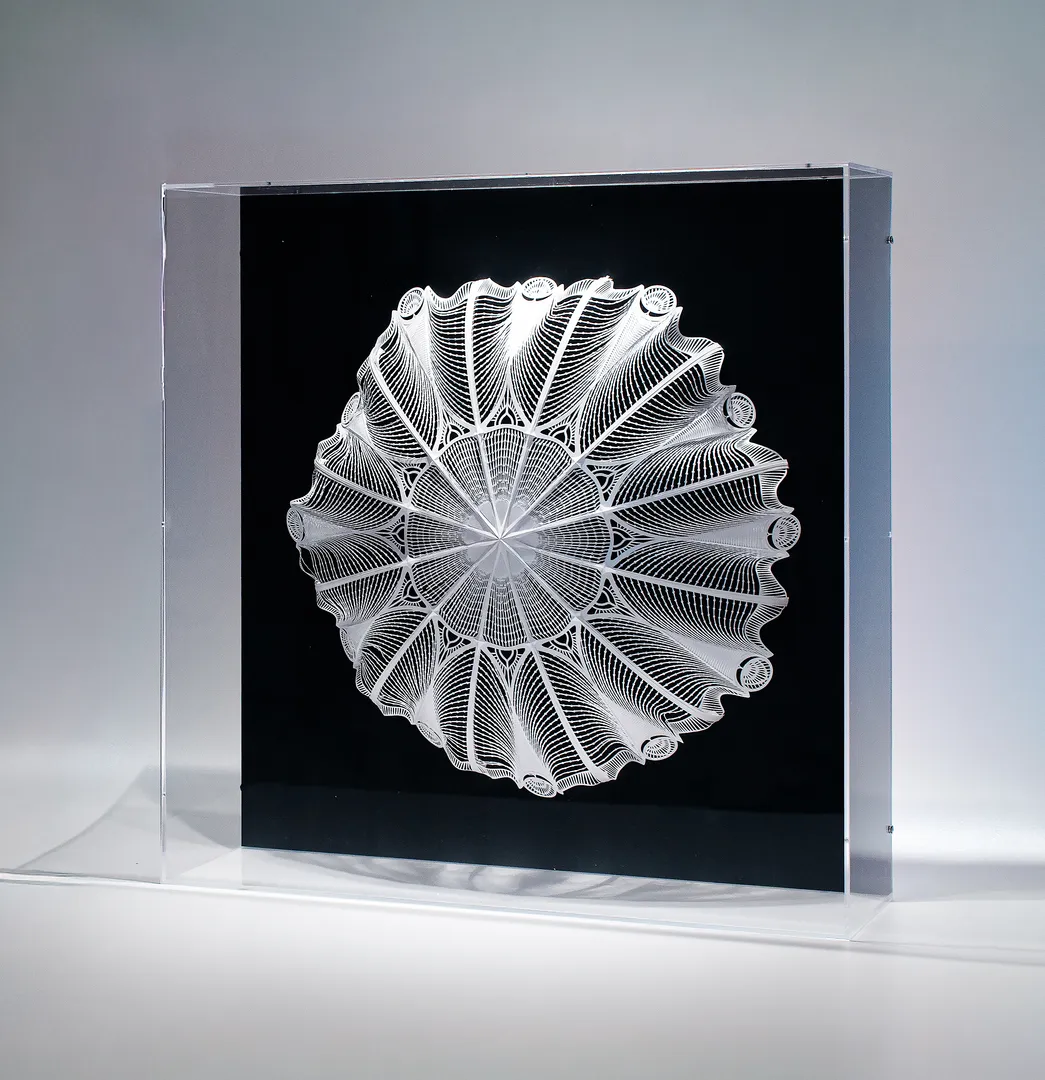
Kami, also known as Camille Benoit, is a French artist and art director based in Hong Kong. Her work centres on the dichotomy of digital design versus manual manipulation; a contrast she amplifies using paper as a vehicle. Her passion for paper art was ignited during her studies for an MA in Art Direction at Penninghen Art School in Paris. In 2020, Kami gained international recognition when her work was featured in notable publications such as Dezeen and AD magazines. As she approaches 2026, Kami is set to unveil her debut exhibition in Hong Kong, showcasing her latest focus on the organic world—transforming wild flora and fauna into intricate paper structures.
Chengxuan (Jacky) Xie (b. 1997) is a Hong Kong artist currently based in London. He obtained his Bachelor of Arts (Fine Arts) from the Chinese University of Hong Kong in 2020. He had also participated in an exchange program at the University of South Carolina (US) in 2019. Xie subsequently completed his MA Painting from the Royal College of Arts, UK, in 2023.
In the artist's words, "Meet the Environment, Meet the Beings, Meet Yourself.
I make immediate responses by life sketching, capturing the essence of life in its rawest form. By using different visual elements to respond to the environment and beings in person. Not only responding to sound, smell, humidity, etc of the environment but also reflecting my own inwardness, which is a combination of natural instinct and experience since I was born, including the social and cultural impact. My work is more of a methodology than a final outcome. It's a way to find my position and my inwardness in certain environments / facing certain beings, reflecting and also constructing my way to understand the world."
Enna Cheung (b. Hong Kong) is an artist specializing in printmaking. She explores skin as a vessel of memory, translating intimate yet fleeting human connection into permanent imprints, from skin to plate then paper, with a gravity on building a safe space for genuine connections. After graduating in Fine Arts at the Chinese University of Hong Kong, Enna was selected for an artist residency at Masereel, Belgium. In 2025, she earned the HKOP Yearly Award in Printmaking and curated her solo print-based exhibition ‘I See Your Strength’.
Jennifer Yue Yuen Yu is an interdisciplinary artist and independent curator whose practice explores the poetics of bodies in transition ecologically, culturally, and personally. She obtained M.F.A. in Public Art and New Artistic Strategies at Bauhaus University Weimar (July 2025), her work is rooted in the heterotopic condition of water, from wells to rivers, and to oceans. Through migration narratives, material memory, and biological research, she investigates how identities emerge, dissolve, and adapt within unstable environments. Jennifer’s current research focuses on marine organisms especially corals and siphonophores, examining how their paradoxical existence as both individual and collective bodies, which proposes alternative models for human coexistence.
Katrina Leigh Mendoza Raimann is a Filipino interdisciplinary artist based out of Hong Kong and graduated BA Fine Art at Goldsmiths, University of London. Working across textiles, installation, and performance, she tells stories of intimacy, relationships, and the body. Her art practice focuses on the histories of material and action, gender and labor. Derived through the exploration of memories, feelings, and lived experiences she depicts images of intangible spaces and landscapes. Her work delves into the
uncertainty of the in-between: the shifting of emotions that spatial (physical) distance and temporal distance creates; where a place stops being just a place but a site of memory or inaccessible future. The boundaries between the physical and intangible are also explored in the creation process. A sensation of movement that is sometimes calm and sometimes erratic is held still through the carefully intertwined and knotted threads.
Keifer Cheung: "I choose black-and-white film to strip away the distractions of color, revealing existence in its raw, essential form. My lens focuses not on scenery, but on shepherd Yeung and his flock. Here, the sheep transcend their pastoral setting, becoming fluid symbols of life, rendered in rich grey gradients. By subtracting color, the image directs attention to pure essence: light sculpting wool into intricate nests of shadow, while the flock’s slow migration traces a silent dialogue between movement and stillness. The shepherd stands as a quiet anchor — a steady axis around which life gently revolves. What emerges is not merely a scene, but a profound texture of relationships: trust woven between human and animal, and breath shared with the land. Black-and-white film possesses a unique alchemy — it stills motion yet allows it to breathe through grain and subtle tonal shifts. Each frame invites the viewer to listen: to the rhythm of hooves, the whisper of wind, and the unspoken bond that transforms daily duty into quiet poetry.
My photography seeks not to capture or dominate, but to coexist. As the sheep dissolve into silver halide shadows, I am reminded that true seeing requires merging with the flow — becoming part of the silence and the enduring story that lingers long after the shutter closes."
This is what Kitty Ng has to say. "My work seemingly focuses on the ordinary moments of everyday life—fleeting, insignificant instances carry more than they show. However, I’m more interested in how they affect us across time, how we recall them, and how our memory takes on colors, hues, and reinterpretations years apart as fragmented images.
In our explorations of what it is that we remember, we reconstruct, reconfigure, mix up, blend together, and re-create images of the past. These images we see today are both a representation and a misrepresentation of what we remember and what we care about. As such, in my work, I am explicitly in conversation with the subconscious connotations of history (Lacan and Freud), the historical affects of history (Fischer, Marx, and Hegel), and the limits/limitations of photography (Sontag and Barthes).
My process begins with a base color, chosen intuitively to represent the emotional tone of the memory. The selection of additional colors is also proto-automatic, driven by how the memory evolves as I reflect on it. I build layers, allowing some colors to dominate while others peek through as an expression of the je ne sais quoi, the inexpressible, or Liu Bai. My goal is to use color and space to evoke an atemporal atmosphere that is difficult to encompass in language, something that is both dynamic and evolving, complete and incomplete."
Cheung's new series investigates the unsettled nature of modern existence through the thematic lenses of glitz reflexivity and opacity. The works capture the inherent conflict individuals face as they navigate along the complex and ever-changing social and economic landscape. Trivial hints of feminine traces spread across the body of works add a layer of intimate, human detail to the broader social commentary, showcasing the dynamism of the contemporary state and the inevitable disorientation of fragmented identity.
Bio
Lily Cheung's work focusses on painting and embroidery to explore the intricate dynamics between individuals and society. Her practice is informed by a diverse academic background, holding a Bachelor of Fine Art from RIT University in partnership with the Hong Kong Art School, and a Bachelor of Social Science in Psychology from the University of York in the United Kingdom.
Cheung pursued studies in oil painting and the specialised technique of Lunéville embroidery in Tokyo and Shanghai from 2018 to 2020. Hey experience of living and learning within varied and constantly shifting cultural landscapes has deeply influenced the artist's creative approach, fostering an openness to experimentation and a drive to explore the boundaries of her chosen materials
Man Mei To (b. 1990, Guangdong and raised in Hong Kong; lives and works in Hong Kong and London)
Man Mei-To’s artworks explore urban vistas and life by observing the intimacy of the body. Her aim is to raise awareness of the existence of all kinds of beings, as well as the connections between their fragility and silence by cloning, reconstructing or quantifying elements found in everyday life. This close attention to the micro-level of daily living allows her work to scale outward, tracing personal history in parallel with social development, observing human mobility alongside land transformation and the disorienting nature of labour. These themes inform her ongoing exploration of fluidity and tension in artmaking, particularly through the conceptual lens of “liquidity”.
The role of the body, especially the hands, is a vessel of unspoken meaning. Body language in her work reveals what words cannot: it conveys tradition, social change, and personal history. Through gesture and material, she mirrors the inner life of the subject and the nature of work itself.
Man received a BA in painting at the Royal Melbourne Institute of Technology University (RMIT) in 2017 and obtained her MFA in sculpture from the Slade School of Fine Art, University College London in 2024. She has been exhibited in international institutions including the Para Site (2025); Hive Center for Contemporary Art, Beijing and Shanghai (2025); Ubicua Gallery, London (2025); Power Station of Art, Shanghai (2024); Tangent Projects, Barcelona (2024); Kyushu Geibun-kan, Fukuoka, Japan (2021); and CHAT-Centre for Heritage, Arts and Textile (2022), Rossi & Rossi (2020), Gallery EXIT (2020), Hong Kong Museum of Medical Sciences (2018) and Hong Kong Arts Centre (2017), all in Hong Kong. In 2021, she was selected for the Tai Kwun Contemporary Artists’ Studio residency programme.
Lo Lai Lai Natalie was born in Hong Kong. Lai Lai is a former travel journalist. She finds her interests in food, farming, fermentation, surveillance, and meditation. She has a farming practice, using photography, video and installation as a means to interact with nature. Her artworks have been featured in screening programs at major institutions including M+ Museum Hong Kong, Centre Pompidou Paris, and Haus der Kulturen der Welt Berlin. She has participated in Lahore Biennale (2024), Gwangju Biennale (2024), and exhibitions at Asian Art Museum San Francisco and UCCA Center for Contemporary Art, among others. Her moving image works are part of the Asian Art Museum of San Francisco. Her work has received significant recognition, including the WMA Commission Grant (2018-19) , Award for Young Artist ( Visual Arts Category) of the 16th Arts Development Awards, Hong Kong (2022) and the Gold Award in the Media Art Category at Hong Kong Art Centre's 26th ifva Awards (2021). She earned an Honorary Mention at Ars Electronica Festival (2024) in the State of the ART(ist) category and was selected as a finalist for The Format25 Open Call in 2025.
Rivian Cheung is an artist based in Hong Kong whose practice focuses primarily on sculpture. She researches and explores the nature and potential of natural materials, frequently using the physical deconstruction of plants as a primary medium. In recent years she has adopted traditional paper-crafting techniques, seeking to incorporate folk-craft skills into sculptural practice. While manipulating various materials for personal expression, she also emphasizes showcasing their distinct characteristics. Through this exploration she aims to reveal and express the inherent language of the materials as well as their thematic potential as metaphors for our relationship with nature, time, mortality, and change. She received a Bachelor of Arts (Sculpture) from RMIT University (co-presented with Hong Kong Art School) in 2017 and was awarded the Mr Jerry Kwan Scholarship the same year. In addition to developing her own practice, she has worked on large-scale projects with artists such as Kingsley Ng (After the Deluge, 2018; Secret Garden, 2018) and Jaffa Lam (Hi! Houses, 2017). Cheung held her first solo exhibition "Uncertain Weight" in Hong Kong in 2025 and her first commercial gallery show "The Remains of Our Days" at Alisan Atelier Hong Kong in 2025.
KAN was born and is based in Hong Kong. She obtained her Bachelor of Fine Art degree co-presented by RMIT University and Hong Kong Art School in 2017. Her practice is rooted in close observation of vegetation that coexists with human environments, often drawn from daily walks and lived surroundings. Through painting, drawing, and installation, she explores themes of liminality and impermanence, reflecting on insecurity, alienation, distance, and questions of identity. Her works evoke subtle, uncanny states that hover between dream and reality, presence and absence. KAN has exhibited in Hong Kong, Dallas, Taipei, Seoul, and Cambridge. She participated in an artist residency at Robinson College, University of Cambridge in 2023, where selected works created during the residency were acquired into the College’s collection.
Wong Sze Wai says, "My art explores the intricate relationship between memory, imagination, and history, crafting spiritual landscapes that reflect both personal and collective experiences. I am fascinated by abandoned spaces and forgotten objects; their silence speaks to my own feelings of loneliness and fear of abandonment, resonating with hidden childhood memories. I employ ancient grotto techniques, layering clay, mineral pigments, and ink to build textures that mimic the passage of time. These methods allow me to convey depth, both physical and emotional, as each stratum represents a moment preserved, altered, or erased. The tactile quality of my surfaces invites viewers to contemplate remembering as an active, imperfect reconstruction. Just as memories fade and distort, my paintings reveal and conceal through veils of color and erosion-like markings. My paintings often depict playgrounds, homes, and backyards, places that once held life but now exist as remnants of past human activity. The absence of people in my work does not signify emptiness but rather a whisper of what once was. Decay, in my visual language, transforms abandonment into a quiet calm, inviting contemplation rather than sorrow. Through multi-layered painting techniques, I explore the dualities of memory, including its formation and erosion, its clarity and distortion. I leave gaps in my compositions, encouraging viewers to engage with the act of remembering, to fill in the empty spaces with their own narratives. By integrating visual fragments from my explorations of forgotten places, I create a journey that exists between recollection and invention, between history and imagination. Ultimately, my work is an invitation, a meditative space where viewers can wander through their own memories, finding solace in the impermanent yet enduring traces of the past."
All prices are in Hong Kong Dollars
-
 Ailsa Wong, Hopping, 2022
 -
Anastasia Fabritskaya, Lama's Hand, 2024
-
Anton Poon, Mahjong Bridge, 2014
-
Brendan Fitzpatrick, In Silver
-
KAMI (Camille Benoit), Media From Above, 2025
-
Chengxuan Xie, Donkey: Never see a flying angel, 2026
-
Enna Cheung, Sunlit Lovers, 2026
-
Kiefer Cheung, Flow of Life, 2025
-
Lily Cheung, Chartres Garden
-
Rivian Cheung, Trial Piece C60St90>C100St50, 2025
-
Jennifer Yue Yuen Yu, The Lightness of Water
-
Katrina Leigh Mendoza Raimann, Head nor Tail, 2022
-
Kitty Ng, 15 West, 21/02/2022, 17:16 – 21/03/2022, 18:50
-
Man Mei To, When the center point is lost , 2021
-
Lo Lai Lai Natalie, Pasting Up: Toxicant, 2023
-
Alonso Odira, Mist Finder
-
Tobe Kan, Betwixt/Arcane 2, 2025
-
Wong Sze Wai, The Freud's Room, 2024